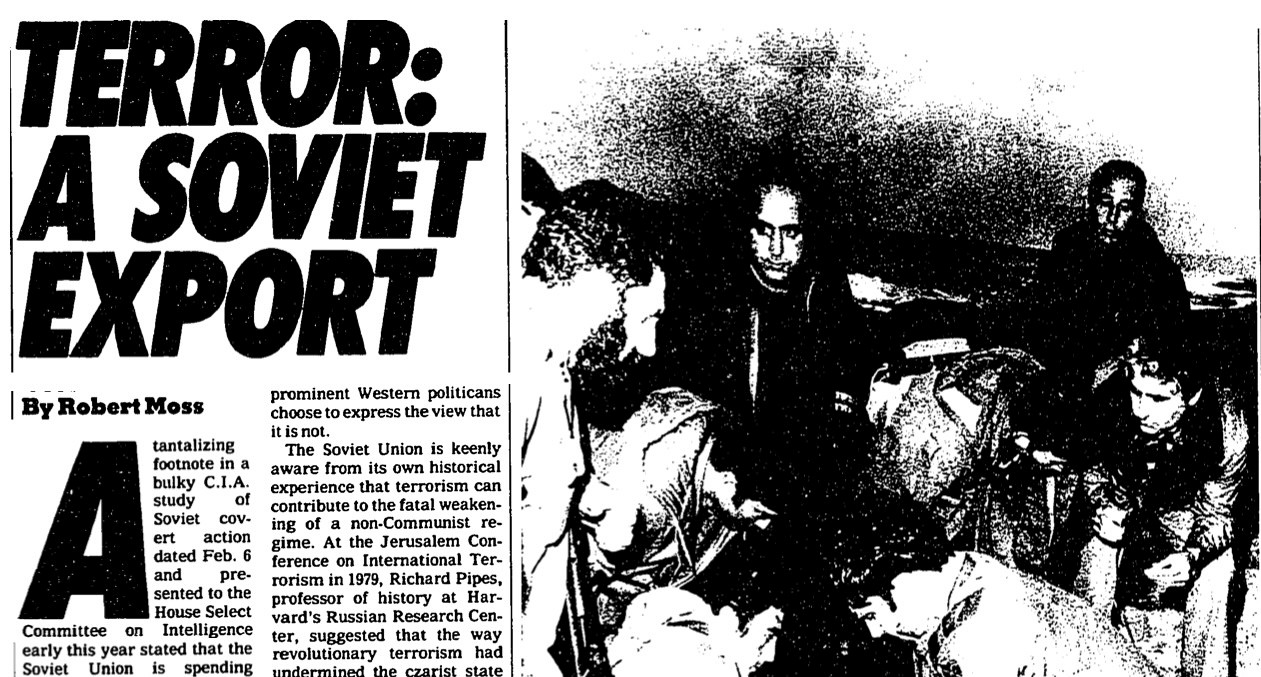
PALESTINE. Where the Children of Israel Crossed the Jordan
October 2, 1922 | © National Geographic via The Stoughton Courier

(Prepared by the National Geographic Society, Washington, D. C.)
Palestine, home of Christianity, the British mandate for which has just been formally approved by the council of the League of Nations, has probably never been better described than by the late, Viscount Bryce, former British ambassador to the United States. In a communication to the National Geographic Society, he wrote of the Holy Land as follows:
***
Taking it as the region between the Mediterranean on the west and the Jordan and Dead sea on the east, from the spurs of Lebanon and Hermon on the north to the desert at Beersheba on the south, it is only 150 miles long and from 50 to 60 broad–that is, to say, it is smaller than New Jersey, whose area is 7,500 square miles.
While in the southwest a wide, rich plain along the Mediterranean was occupied by the warlike Philistines, who were sometimes more than a match for the Hebrew armies. Israel had, in fact, little more than the hill country, which lay between the Jordan on the east and the maritime plain on the west. King David, in the days of his power, looked down from the hill cities of Benjamin, just north of Jerusalem, upon Philistine enemies only 25 miles off, on the one side, and looked across the Jordan to Moabite enemies about as far off, on the other.
Nearly all the events in the history of Israel that are recorded in the Old Testament happened within a territory no bigger than the state of Connecticut, whose area is 4,800 square miles; and into hardly any other country has there been crowded from the days of Abraham till our own so much history–that is to say, so many events that have been recorded and deserve to be recorded in the annals of mankind.
Its Smallness is Visible.
***
From the heights a few miles north of Jerusalem he sees, looking northward, a far-off summit carrying snow for eight months in the year. It is Hermon, nearly 10,000 feet high–Hermon, whose fountains feed the rivers of Damascus. But Hermon is outside the territory of Israel altogether, standing in the land of the Syrians; as, too, it is of Lebanon. We are apt to think of that mountain mass as within the country, because is also frequently mentioned in the Psalms and the Prophets, but the two ranges of Lebanon also rise beyond the frontiers of Israel, lying between the Syrians of Damascus and the Phoenicians of the West.
***
To an Arab tribe that had wandered through a barren wilderness for 40 weary years, Canaan may well have seemed a delightful possession; but taking a county in Iowa, many a department in France, could raise more grain or wine than all the Holy Land.
There is one stretch of fertile, level land 20 miles long and from 3 to 6 miles wide–the Plain of Esdraelon. But with this exception it is only in the bottoms and on the lower slopes of a few valleys, chiefly in the territory of Ephraim from Bethel northward and along the shores of the Bay of Acre, that one sees cornfields and olive yards and orchards. Little wine is now grown.
Palestine is not a beautiful country. The classical scholar finds charms everywhere in Greece, a land consecrated to him by the genius of poets and philosophers, although a great part of Greece is painfully dry and bare. So, too, the traveler who brings a mind suffused by reverence and piety to spots hallowed by religious associations sees the landscapes of the Holy Land through a golden haze that makes them lovely. But the scenery of the Holy Land, taken as a whole, is inferior, both in form and in color, to that of northern and middle Italy, to that of Norway and Scotland, to that of the coasts of Asia Minor, to that of many parts of California and Washington.
The hills are flat-topped ridges, with a monotonous sky line, very few of them showing any distinctive shape. Not a peak anywhere, and Tabor the only summit recognizable by its form. They are all composed of gray or reddish-gray limestone, bare of wood, and often too stony for tillage. Between the stones or piles of rock there are low shrubs, and in the few weeks of spring masses of brilliant flowers give rich hues to the landscape; but for the rest of the year all is gray or brown. The grass is withered away or is scorched brown, and scarcely any foliage is seen on the tops or upper slopes of the rolling hills. It is only in some of the valleys that one finds villages nestling among olive groves and orchards–where plums and peach and almond blossoms make spring lovely.
Few Wells and Springs.
Arid indeed is the land. The traveler says with the psalmist: “My soul longs in a dry, parched land, wherein no water is.” Wells are few, springs still fewer, and of brooks there are practically none, for the stony channels at the bottom of the glens have no water except after a winter rainstorm. There may probably have been a more copious rainfall 20 or 30 centuries ago, when more woods clothed the hillsides, and the country would then have been more pleasing to Northern eyes, to which mountains are dear because rills make music and green boughs wave in the wind.
***
If Palestine is not a land of natural wealth nor a land of natural beauty, what is it? What are the impressions which the traveler was tries to see it exactly as it is carries away with him? Roughly summed up, they are these: Stones, caves, tombs, ruins, battlefields, sites hallowed by traditions—all bathed in an atmosphere of legend and marvel.
Never was there a country, not being an absolute desert, so stony. The hillsides seem one mass of loose rocks, larger or smaller. The olive yards and vineyards are full of stones. Even the cornfields (except in the alluvial soil of the plain of Esdraelon and along the sandy coast) seem to have more pebbles than earth, so that one wonders how crops as good as one sometimes seen can spring up. Caves are everywhere, ‘for limestone is the prevailing rock, and it is the rock in which the percolation of rains makes clefts and hollows and caverns most frequent.
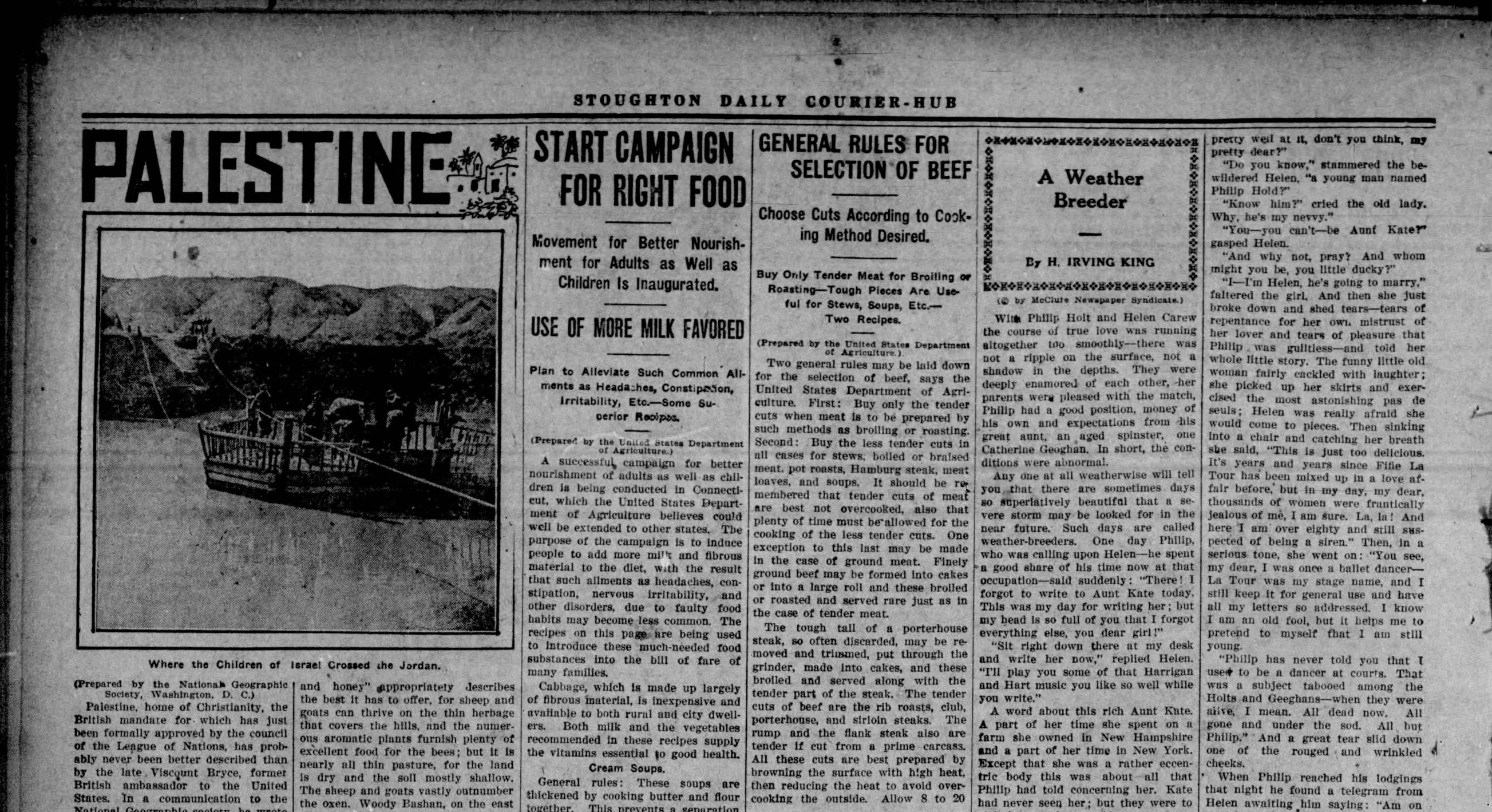
October 2, 1922 | © National Geographic via The Stoughton Courier
Archival material reproduced here for educational and research purposes under fair use. Original copyright belongs to the respective publisher.
About

Every headline has a history. We go back to the archives of the same media you read today — to show how their own words have changed. Facts don’t expire. Narratives do.
Featured Posts