Casualty and Propaganda
By Martha Gellhorn (born November 8, 1908) who was an American journalist and novelist who, as one of the first female war correspondents, candidly described ordinary people in times of unrest. Martha Gellhorn wrote “The Arabs of Palestine” for The Atlantic Monthly. This story was published in The Guardian on July 24, 1967.

Jul 24, 1967
FOR the best part of a month I have been listening to Palestinian Arabs in West Jordan and the Gaza Strip. It always started well. Arabs have charming manners, though somewhat less charming to their own women, and are often fine to look at. Wherever we were, we sat in a circle, group formation, drank coffee from tiny cups, and conversed like reasonable people. Then suddenly all was lost.
“Bethlehem was bombed all day!” one cries. But there is Bethlehem, intact and rosy in the afternoon light. “The Jews came to every house in Nablus, shooting. Our youths defended their homes. Two hundred were killed, women, children, boys, at least 200.” And there are the houses, solid, unmarked, of cut stone, and on a later visit, calmer counsel reduced the number of civilian deaths to 19: still incredible. Where? How? We agree there was no fighting here. We agree that the town is untouched except for a few buildings at the southern entrance. We agree that this damage is minimal. Yes, the “youths” were probably “shooting a bit” from the now lightly pock-marked police post out there, perhaps also from the nearby buildings. No records: no circumstantial evidence. It is comforting to feel certain that people are alive and well whom propaganda has killed.
In a Gaza Strip refugee camp, a very fat, pleasant-faced old man, surrounded by his buxom wife and eight stout healthy offspring, announced with terror, “The Jews shoot every man, woman and child they see in the street.” He had witnessed this crime? No. Then he must have heard the shots? No. The camp was an oasis of peace: not one shot had been fired anywhere near it; and the Israelis, poised to kill, were five dusty young soldiers, sitting on a wall across the main road, as guards for the large camp warehouse.
Arab logic
There is logic in this new post-war Arab propaganda. Before the third Arab-Israeli war intoxicated by every propaganda drug, these Arabs truly expected to wipe out Israel. For once, they had reason to believe their propaganda, considering the beautifully billionaire Russian weaponry of the Egyptians, and the size and might of the Arab armies. Even as civilians, they could hope to take some part in the glorious victory, since the Jordanian and Egyptian governments distributed weapons lavishly to the population in West Jordan and the Gaza Strip.
If the Six Day War can be made to seem a nightmare, a hell of fire and flying steel, if their sufferings were unparalleled, defeat becomes justified. And the Israelis become more hateful, evil, ruthless. The roles are reversed: David is changed into Goliath. This logic clearly dominates official Arab propaganda. It accounts for the casualty figures put out by Jordan (an original claim of 25,000 civilian and military deaths lowered to 15,000) and for reports of “the fury of war,” peril and shattered homes, which drove 200,000 refugees to seek safety across the Jordan River. The land must lie in rubble, for propaganda purposes.
Happily for the Arabs in the war zones, and heartening for us all, the fact is that the Third Arab-Israeli War, the Six Day War, scarcely touched the Arab civilian population. I am not talking about Arab emotions, I am talking about real war: death and destruction. The difference is self-evident, like the difference between civilian life in London and New York, during the Second World War.
Before this recent conflict, an estimated 1,500,000 civilians lived in West Jordan, the Gaza Strip, Syrian hill villages within the Syrian Maginot Line and the adjacent Syrian garrison town of Kuneitra, and two Egyptian towns on the edge of the Sinai desert. Those were the Arab civilian war zones. Some 41,000 Israeli citizens also lived in war zones: on their side of Jerusalem, under sweeping Jordanian artillery fire for 52 hours; on populous Israeli farmland along the entire Syrian frontier, shelled by Syrian artillery for four days; in the narrow waist of Israel from Tel-Aviv to Lydda, hit by sporadic Jordanian artillery fire for two days. Nearly two million civilians were therefore at risk.
I submit that a total of two hundred civilians, Arab and Israeli, everywhere, throughout the war, is the highest conceivable number of noncombatants killed.
All the dead are to be pitied and mourned; none should be exploited for propaganda. In my opinion, that death toll is still too high. I am glad to think that fewer human beings lost their lives. (The military casualties are tragic enough.) But I accepted Arab statements on the spot, even though they denied the evidence before our eyes. I checked at hospitals, talked with Arab mayors, ordinary Arab residents, priests, UNRWA (United Nations Relief and Works Agency) staff, and scoured the war zones to see the actual damage of war to cities, towns, villages, refugee camps.
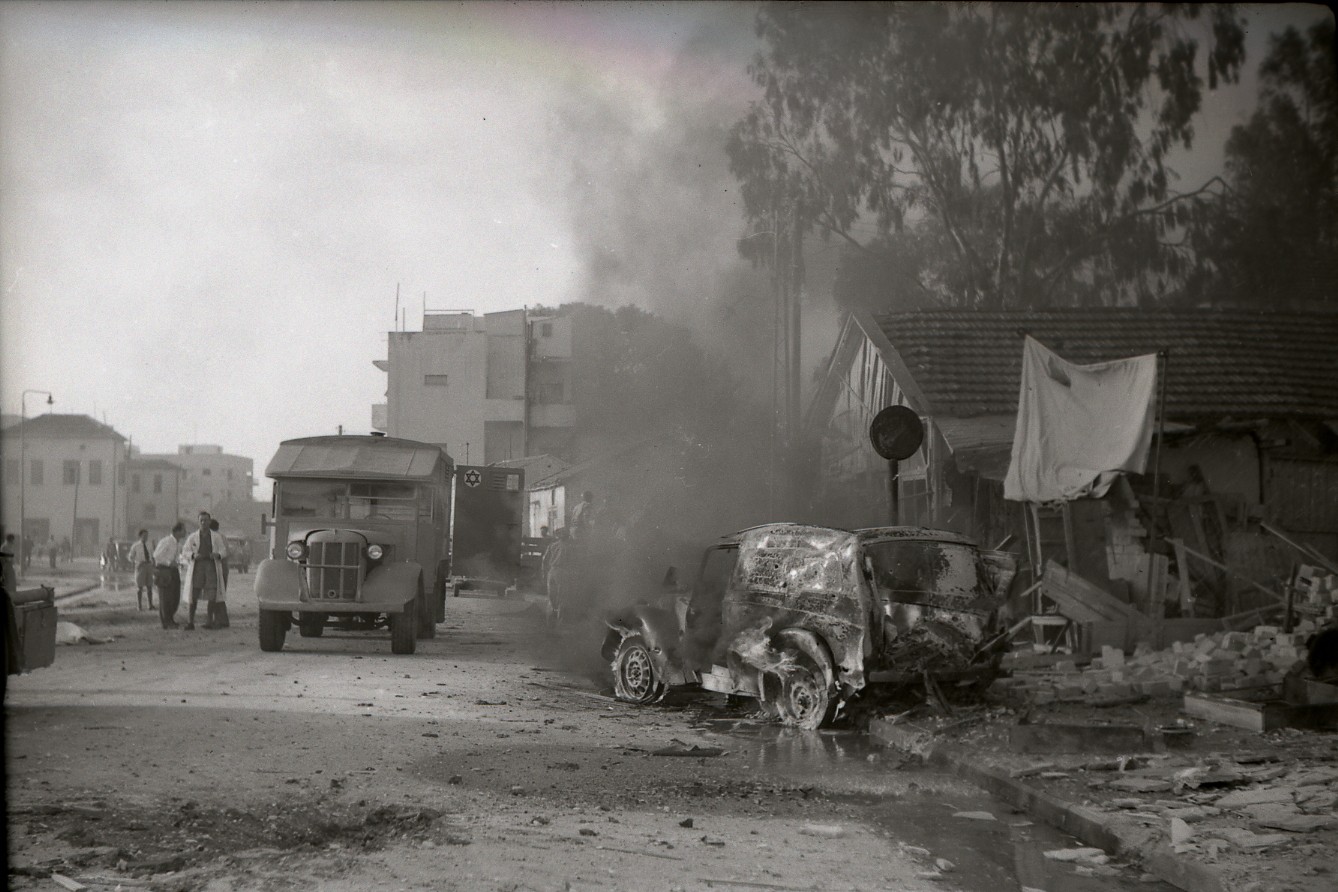
From England eastwards around the world to Japan, adults remember civilian war as bombing from the air: a horror. The people of Vietnam know this sort of war, with agony. Bombs are the mass destroyers of civilians and their homes. In the entire Six Day War, the Israeli Air Force dropped 10 to 15 light bombs on one civilian target, the Syrian garrison town of Kuneitra.
Kuneitra (pop: 30,000) lies immediately behind the fortified Syrian hills, a Middle Eastern Maginot Line. The Israeli Army and Air Force attacked these positions and Kuneitra on the sixth day of the war. Below Kuneitra, the Syrian villages between the military strong points were evacuated before the battle began. It is unlikely that the Syrian Army Command, in its minor Pentagon headquarters at the edge of Kuneitra, had not also evacuated the army families from the town. Kuneitra was deserted when the Israeli Army entered it on the afternoon of the sixth and last day of the war.
Bombs on target
Twice, the Israeli Air Force operated in civilian-inhabited areas. Israeli planes gave close support to infantry fighting on the hills behind Jerusalem, and again on the road to Gaza town. No one denies the accuracy of the Israeli Air Force; bombs did not rain by accident, away from the military targets, all over helpless civilians.
After bombing, the doom of civilians is to live on a battlefield, pounded by artillery and overrun by soldiers fighting in the streets and through their houses. In West Jordan, civilians live in Jerusalem, in nine small towns, 20 refugee camps, and some 350 rural settlements. The war was 70 hours long. The Jordanian Legion and Israeli Army fought in only three inhabited areas: Jerusalem, mainly on the surrounding hills (civilian deaths 25); a border town Qalqilya (15); a border village Ya‘bad (16). The passage of war caused civilian deaths in Jenin (2), Nablus (19), Tulkarm (30), Ramallah (2), Bethlehem (7), and the village of Beit Mersam (1). All refugee camps were intact.
Israeli civilian war deaths were in Israeli Jerusalem (15). In the remaining Israeli war zones (8). Artillery fire destroyed Israeli property and farmland; people stayed in shelters.
In the Gaza Strip, civilians live in three towns, eight refugee camps, and innumerable single farmhouses and clusters of houses. During approximately 28 hours of war, the Israeli Army and combined Palestine Liberation Army and Egyptian units fought along the road from the Strip’s southern entrance into the southern section of Gaza town. No refugee camps were hit. Judging by visible war damage, hospitals, talks with refugees, I conclude that 10 civilians is the highest probable death toll.
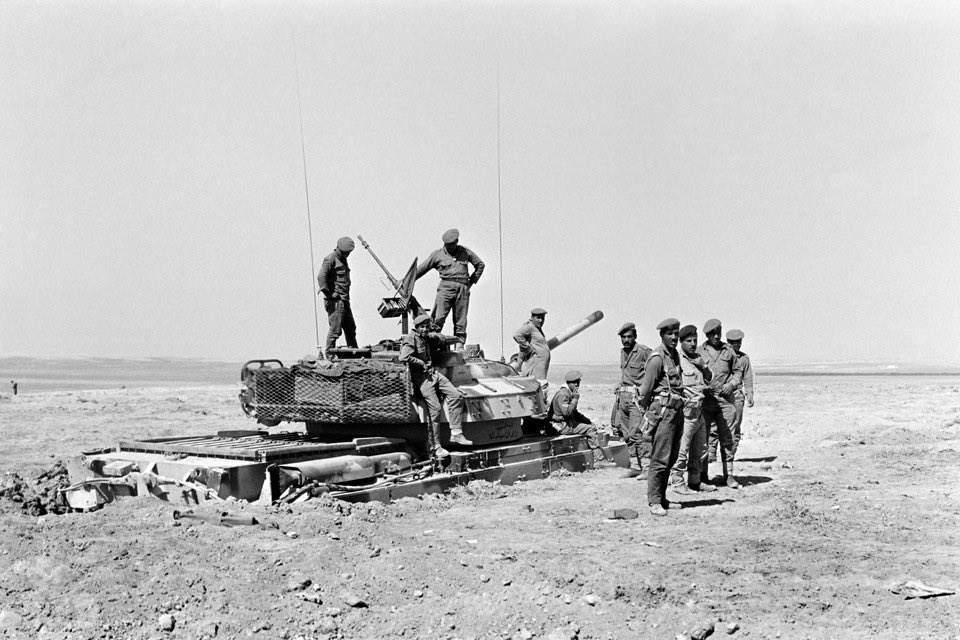
Significantly, neither the Egyptian nor Syrian Governments made any claim of civilian deaths when announcing their combat casualty figures. The heaviest battle of the war was fought in the Sinai desert, away from all civilian habitation. On the edge of the Sinai desert, the town of El Arish lay outside the battle zone, undamaged. Entered on the sixth day of the war, the town of Kantara on the Suez Canal was almost totally evacuated. It shows signs of small arms sniping at its entrance on the desert side. For 38 hours, Israeli and Syrian forces fought in the military positions on the Syrian hills, in gun emplacements, bunkers, trenches and in three deserted villages between these positions. Early witnesses and later observation indicate there were no civilians in the battle zone during the hours of combat and that the estimated 300 civilians now in Kuneitra returned to their homes, as the whole Druse population returned to its villages, after the cease-fire.
Possibly, but one can hope with reason not probably, there could have been 50 more civilian casualties in damaged private cars and isolated buildings along some major roads in West Jordan and the main Gaza road. A 19-year-old Israeli soldier, hitch-hiking back to his post in West Jordan, explained this war perfectly. "The General say and every soldier understand we fighting armies not peoples." It was a war between armies, mercifully remote from the people.
Fortunately, Israelis are not addicted to propaganda. Propaganda is the begetter of hate and hate is the begetter of killers. Perhaps, as time goes on, the Arabs in Israeli-held territory will decide that peace is more rewarding than propaganda. There are hopeful signs: Bethlehem is a joyous boom town, full of Israeli tourists; and the Israelis cannot squeeze into their municipal swimming pool in Jerusalem because it is full of Arabs.
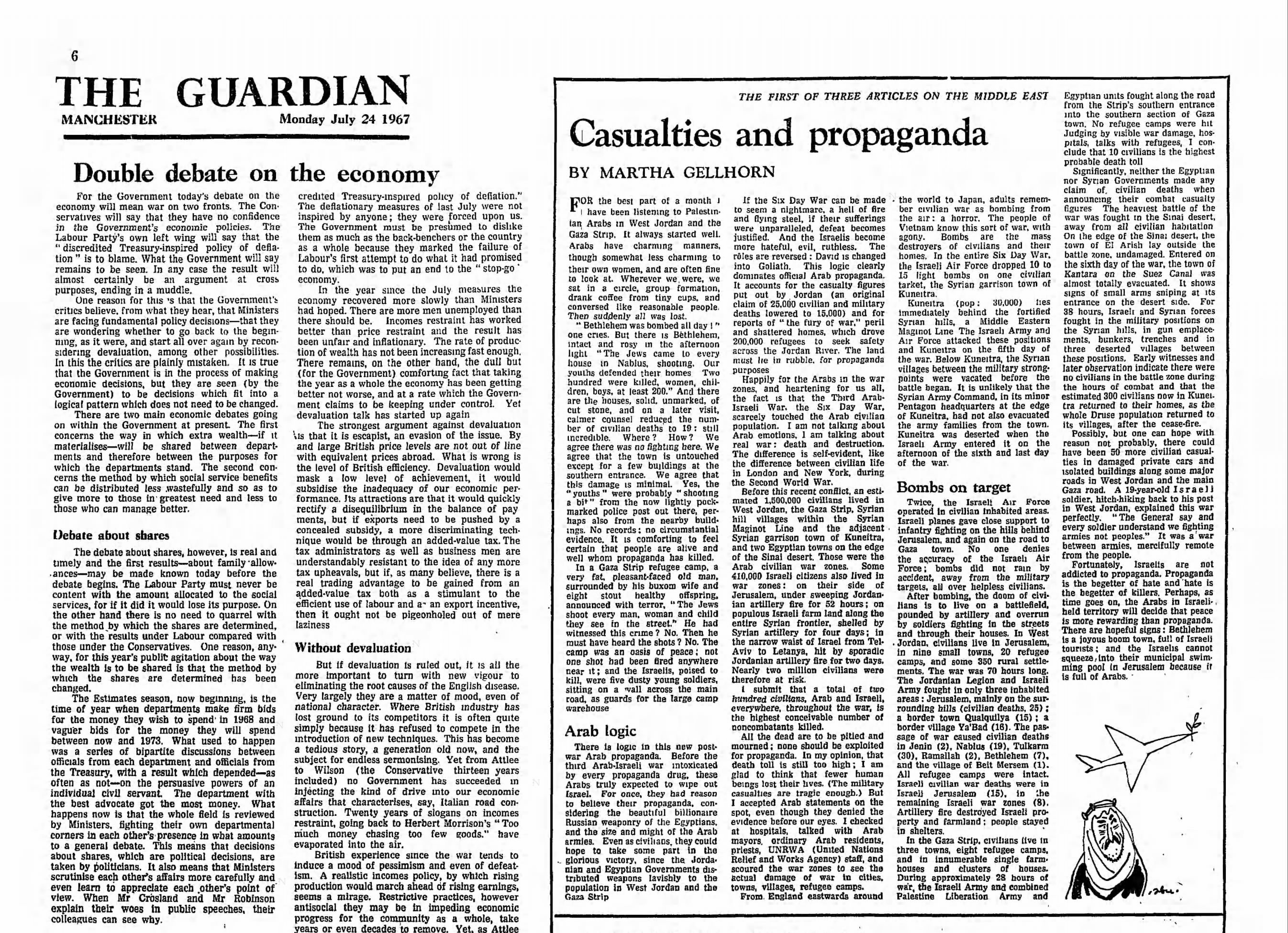
July 24, 1967 | © The Guardian
Archival material reproduced here for educational and research purposes under fair use. Original copyright belongs to the respective publisher.
About

Every headline has a history. We go back to the archives of the same media you read today — to show how their own words have changed. Facts don’t expire. Narratives do.
Featured Posts