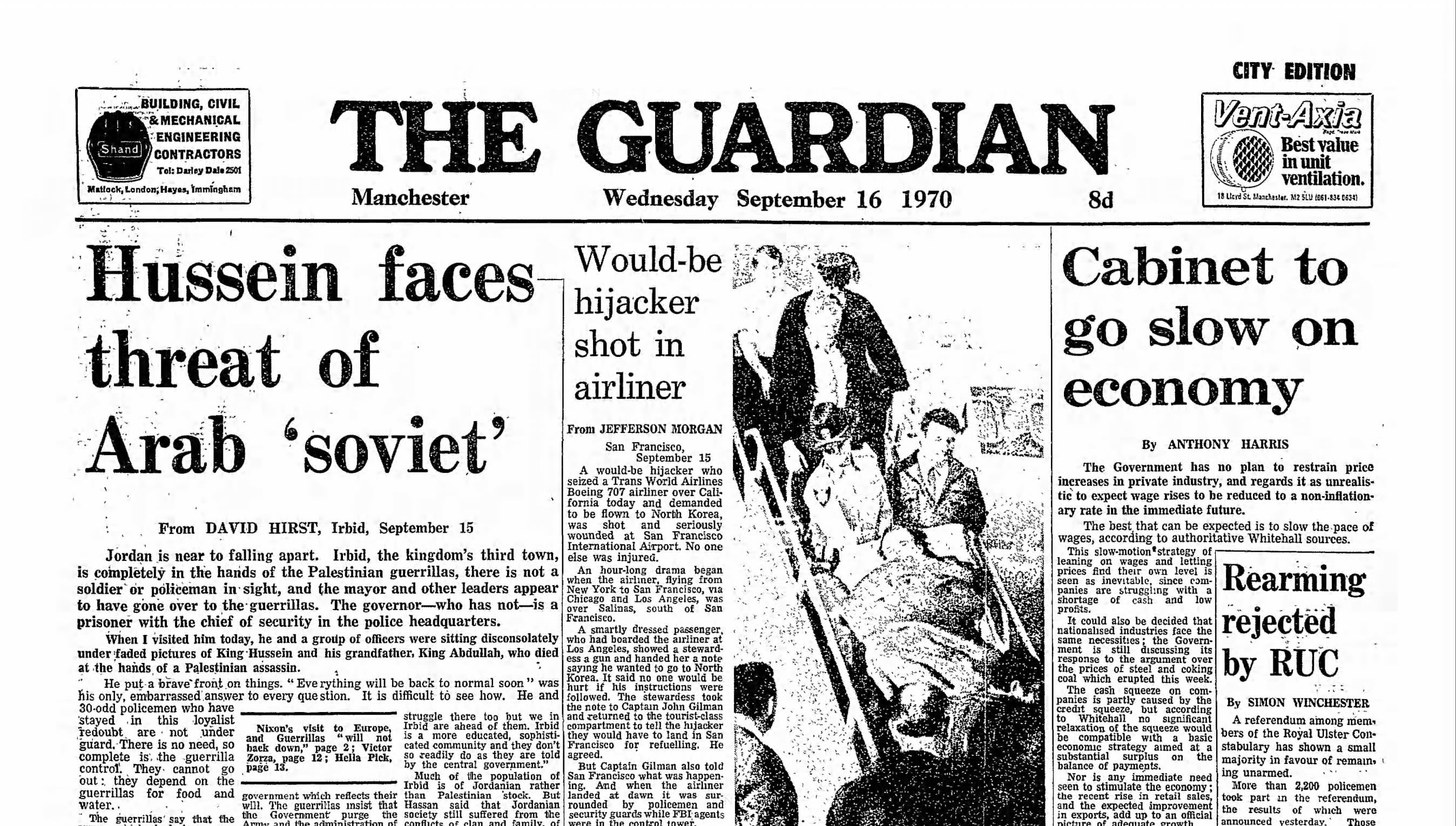
Hussein faces threat of Arab 'soviet'
From DAVID HIRST, Irbid, September 15
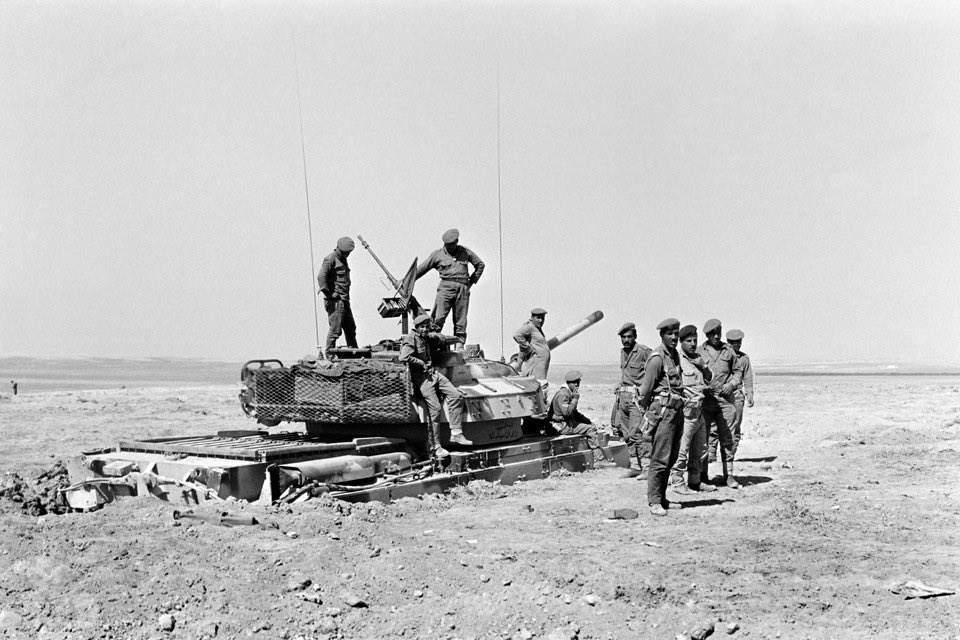
Sep 16, 1970
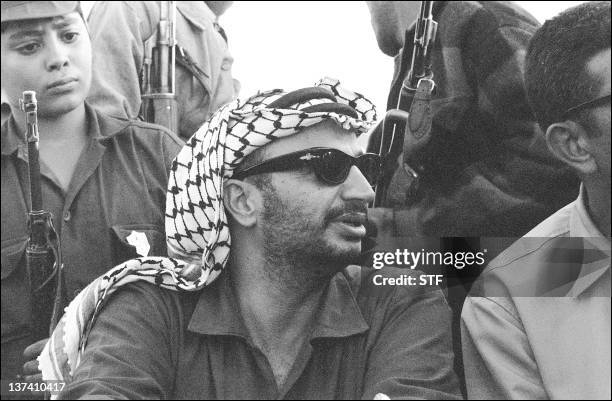
Jordan is near to falling apart. Irbid, the kingdom's third town, is completely in the hands of the Palestinian guerrillas, there is not a soldier or policeman in sight, and the mayor and other leaders appear to have gone over to the guerrillas. The governor—who has not—is a prisoner with the chief of security in the police headquarters.
When I visited him today, he and a group of officers were sitting disconsolately under faded pictures of King Hussein and his grandfather, King Abdullah, who died at the hands of a Palestinian assassin.
He put a brave front on things. "Everything will be back to normal soon" was his only, embarrassed answer to every question. It is difficult to see how. He and 30-odd policemen who have stayed in this loyalist redoubt are not under guard. There is no need, so complete is the guerrilla control. They cannot go out; they depend on the guerrillas for food and water.
The guerrillas say that the army, which had been surrounding the town, has withdrawn. Units of the Palestinian Liberation Army, probably reinforced from Syria, are taking up defensive positions on the outskirts. Commando groups man checkpoints on the way in.
Abu Hassan the chief political officer of Al-Asifah, the military wing of the Al-Fatah guerrilla group, explained the revolutionary situation.
"This week you may see the birth of the first Arab liberated zone. You could call it—and I prefer to call it—the first Arab 'soviet'," he said.
"What happens now depends on the King. He has our ultimatum. We shall no longer recognise his authority if he does not accept the demands of the central committee of the guerrilla movement."
Irbid is the first major move in the guerrillas' drive to install in Amman what they call a "National authority"—a government which reflects their will. The guerrillas insist that the Government purge the Army and the administration of anti-guerrilla "agents," put on trial those responsible for the recent bloodshed, and ensure that the army goes to the front, where it belongs.
As for the King, says Abu Hassan, "he can be our Sihanouk in or out of Amman, though we prefer him in—then the Americans won't bomb it."
'Congress'
Today, delegates representing about 200,000 people living in Irbid and its region were called to a "Popular Congress" to debate the future of Irbid; self-governing institutions are in the making.
"What we want is a political, not military victory, a victory by persuasion. But there's a tremendous sense of unity," said Abu Hassan.
"The King's army helped by shelling us. Freedom spreads like fire. Our colleagues in Amman are winning the struggle there too but we in Irbid are ahead of them. Irbid is a more educated, sophisticated community and they don't so readily do as they are told by the central government."
Much of the population of Irbid is of Jordanian rather than Palestinian stock. But Hassan said that Jordanian society still suffered from the conflicts of clan and family, of tribe versus town and Jordanian versus Palestinian. "We are trying to stop all that," he said.
The guerrilla takeover of Irbid began a week ago. Hassan said Iraqi troops had withdrawn from the immediate area and Jordanian troops took the opportunity to attack a Fatah base, killing 35 men and mutilating their bodies.
"We were decided to act. We are doing so on direct orders from Yasser Arafat. We took the town with a minimum of bloodshed. The so-called 'Popular Resistance' set up by the King, gave up their arms after the leader Kamil Abdul Kadir was killed.
"We told the army that if it did not withdraw, we would attack it. It has withdrawn. Yesterday we had a trial in absentia of officers we hold responsible for the massacre. There are nine of them. Our men have been told that if they fall into their hands, they can shoot them. But we try to win over the soldiers — our brothers."
Could Irbid maintain itself, apart from Jordan? Abu Hassan admitted it might be difficult, but he hinted that the secessionists could count on the help of Syria or Iraq—notably Syria, because there are no Popular Front members in Irbid.
The moment is near for Hussein; he must either bow again to the guerrillas, becoming more and more like a constitutional monarch, or make a desperate, bloody bid to crush them.
Eliminated
From Beirut Harold Jackson cables that reports from commando sources say that the guerrillas have been virtually eliminated in the south of Jordan. They accuse King Hussein of arming the Bedouin tribes, and training them to operate against the Palestinians.
According to these reports, a meeting of Bedouin leaders agreed to act against the commandos and the Jordanian army, then moved in with heavy artillery bombardments on guerrilla camps in the south. After fierce fighting, in which 70 Palestinians were killed, all the bases were taken.
Fifty or so wretched European hostages sit in the middle of all this, waiting for someone to sort it out. The report of one who has been released, the steward of the Swissair plane, indicates that they are being well treated. But the Popular Front still holds out threats against them if the five Powers do not cave in—either jointly or individually. And that could take a long time yet.
September 16, 1970 | © The Guardian
Archival material reproduced here for educational and research purposes under fair use. Original copyright belongs to the respective publisher.
About

Every headline has a history. We go back to the archives of the same media you read today — to show how their own words have changed. Facts don’t expire. Narratives do.
Featured Posts