SUCCOTH—FEAST OF BOOTHS.
How This Hebrew Holiday was Celebrated Yesterday.
The services in the Synagogue last evening were highly interesting, the main feature being the beautiful singing of the choir consisting of Mrs. Beeson, Mrs. Book, Mr. Fanning, Mr. Brooks and Mr. Loebe, under the leadership of Prof. Loeb and the able English lecture of Dr. Strieher.
This holiday is the Jewish “Harvest Festival” and, accordingly, the pulpit was tastefully decorated with flowers and a variety of the fruits of the season, in which this country so preeminently abounds. The Doctor explained the meaning of the festival as a “Thanksgiving day,” although originally merely an agricultural holiday, it broke through the national signification and, in course of time, developed into a historical festival as a “Day of Joy.” It enjoins upon Israel to seek joy, but to purify pleasure from all stains of sin, to rejoice on account of the good harvest, not only the farmer and vineyardist, but every human being participates in the blessings of God manifested in the undisturbed growth of the fruits, in the fertility of the soil, and ought to thank God.
But, in order to deserve a good harvest, man has to labor in the sweat of his brow. In this connection the Rabbi made a very eloquent appeal in behalf of teaching the boys trades and handicraft, showing the great advantages of mechanics, and giving some interesting quotations from the Talmud on the subject, some of which read as follows: “Handicraft makes honorable and respectable those who pursue it.”
“Seven years of famine will not reach the door of the tradesman.” It was only during the times of persecution that the Jews were prohibited from engaging in honest trade and excluded by the guilds. While in Palestine they were the best farmers and most able mechanics. The Doctor dwelt further on the virtues of contentment and charity. Dissatisfaction, envy and jealousy cast a gloom over every joy; while he who confers blessings upon others, who helps alleviate the misery of others, will feel the truth of the words of the Talmud: “Rejoice in thy feast thou, thy son, thy daughter, thy servant, the stranger, the orphan, the widow, the poor.” That means by lending a supporting hand to the needy, the suffering and unfortunate, you will feel true ease, satisfaction and happiness.
In conclusion the Rabbi dwelt on the blessings of the Jewish family life, which even in the dreary desert of the dark ages was to the persecuted Jew a shelter, a “Succah,” a tabernacle of peace and happiness, a protection against the heat of a scorching fanaticism, against the frosts of prejudice and an impenetrable iron wall against the onslaught of hate, oppression and persecution.
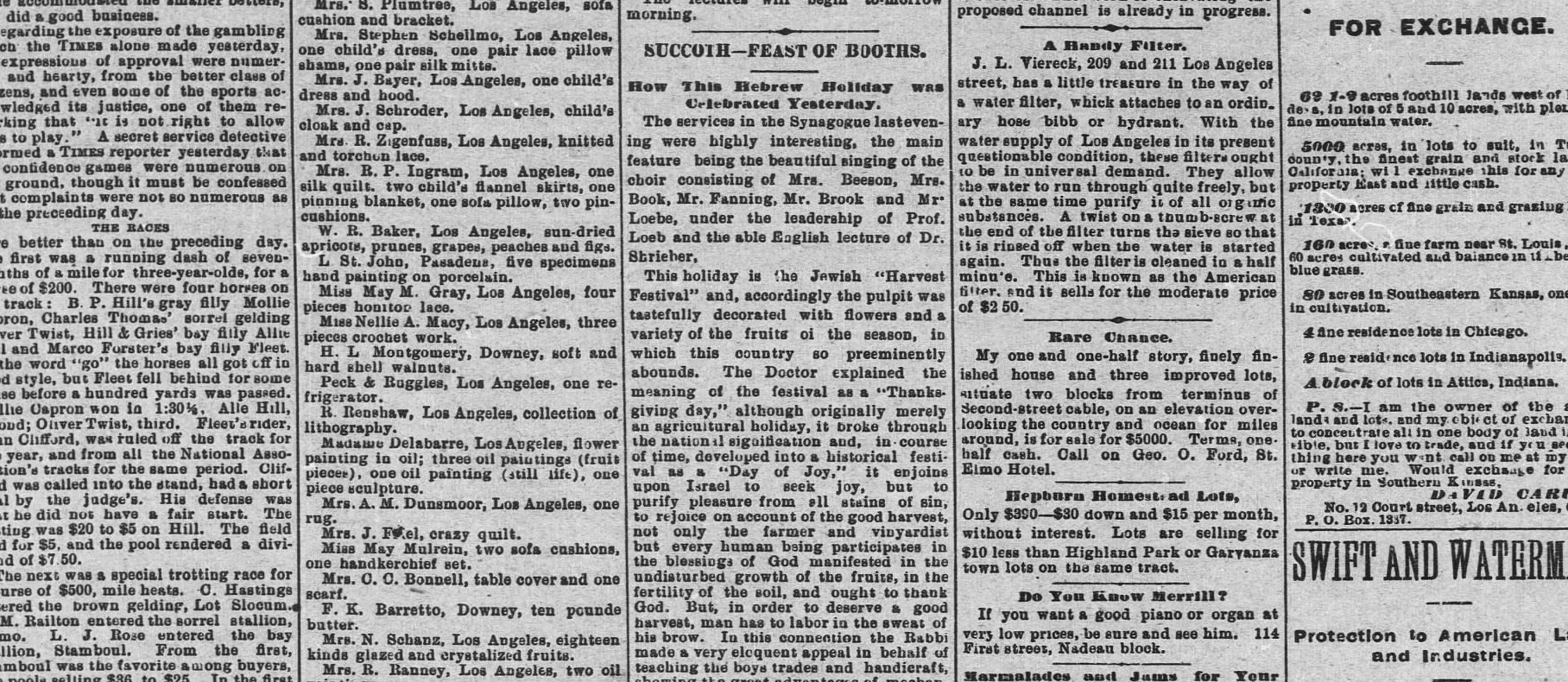
October 14, 1886 | © The Los Angeles Times
Archival material reproduced here for educational and research purposes under fair use. Original copyright belongs to the respective publisher.
About

Every headline has a history. We go back to the archives of the same media you read today — to show how their own words have changed. Facts don’t expire. Narratives do.
Featured Posts