PALESTINE ARABS GET RICH ON FARMS
High Food Prices Result in Agricultural Expansion— Post-War Issue Seen
VEGETABLES RISE 200%
Wheat Quotation Up Fourfold —Fruit and Pigs Bring Fabulous Figures
By Wireless to THE NEW YORK TIMES
JERUSALEM, June 17 (Delayed) — One of the remarkable effects of the war on Palestine has been the amazing extent to which agricultural prosperity has spread among a formerly indigent Arab peasantry as well as among the Jewish farmers. The secret, it was privately said, is truck farming and fruit growing.
With great numbers of British and Allied troops in the country and with the war still on, to some degree through shipping considerations, the prices of most staples must fill the gap and consequently there has been an astounding rise in staple-commodity prices.
The retail price index for food for the Jewish workers shows around 280 and on the Arab markets over 300 compared with the average of 100 to August, 1939.
The Arab peasants particularly are getting prices for vegetables and fruit at which their imaginations would once have boggled. An Arab peasant who has a hundred acres of rocky soil near Bethlehem where, with his three sons and four brothers, he barely eked out a living from the sale of firewood, grapes and vegetables, has been offered $2,500 for his land and refused to sell, his garden and vegetables have been bringing him $600 before the war. They are not very big grapes, either.
Arab Peasant Grows Rich
This young peasant, who is only 28 years old, made a cash investment with his surplus cash. He took some of his profits on the fourth when he four purchased a small house for his family and, besides, bought additional beasts of burden to serve the family as commercial vehicles to take his produce to the market and he is getting the best prices for their fruit and vegetables.
The phenomenal boom in agricultural prices has not cut off the Jewish farm operators off on a spending spree, however.
The Jewish farm householders who inherited his father’s and grandfather’s individualistic totalling of $1,000 has fully paid off that mortgage under which he had been operating. He had a small family and lives in poverty under the family hearthstone—thus spending for only basic needs—distrust modern banking institutions. A sizable part of his post-war investment in land $4,000 for his own expansion has been his only spending.
That is what the United States Levant Agricultural Cooperative, operating on the Palestinian coast, has laid out a hundred-acre truck farm to grow its own green stuffs and for visiting troops.
Wheat grown locally also commands the special market price of the war and represents a fourfold rise of $24 per one hundred kilograms of the pre-war price of $24, while much of the imported wheat has gone to the black market. For example, while Canadian wheat, which goes into bread, the market, is obtainable on the black market at $4 a hundred kilograms, the price for wheat locally was $5 once for the same quantity.
One reason why the principal market was Britain and Allied war shipping to the Far East war, are now recouping some of their losses by providing home foodstuffs for the market. Varying with each kind of product, the Allied forces take some of the excess plants of this subtropical land in some of the crops, which cover all types of cultivation.
Another lucrative branch of husbandry is pig breeding. The strictness along with many laws banning their ham and bacon rashers from the Jewish diet, so the war-barred legumes for animal fodder, now taking up porcine animals for feeding, is a pity since the war has changed all that, although Moslem and Jewish farmers are still hesitant on orthodox or ritual grounds to sell their ham and bacon to the Christian Arab breeders.
Some Staggering Prices
Prices in this field stagger the mind. A fatling pig just for stock purposes commands $3,000. Small pigs of two months old sell for $250. A 500 kilo breeding pig in slaughter condition comes as a low as $1,500.
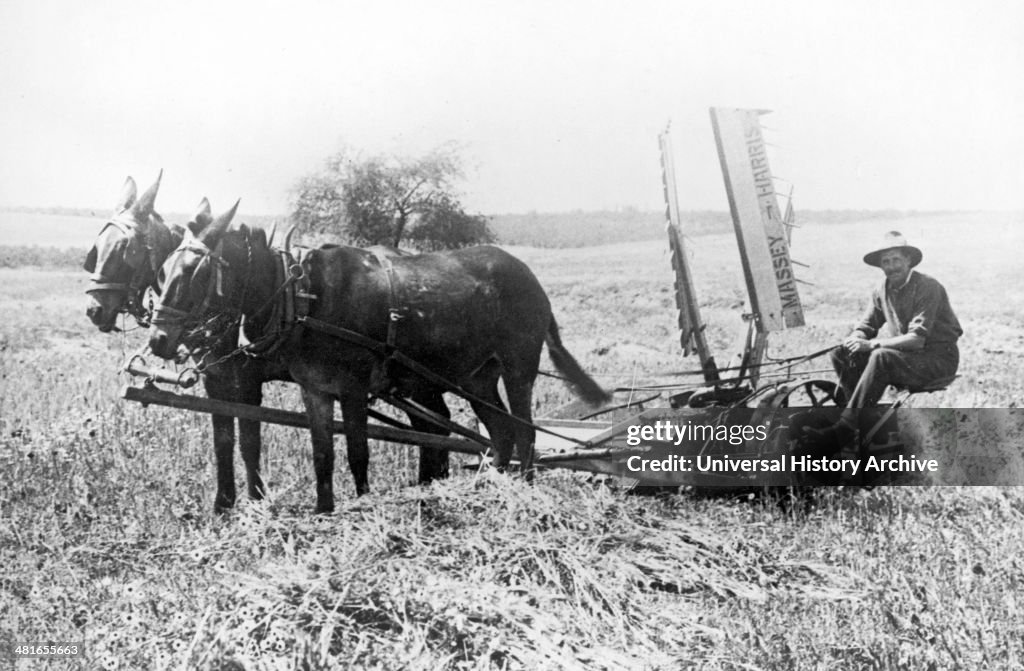
It must not be forgotten that Jewish settlement methods along modern lines has stimulated a great advancement from the Arabs who now use up-to-date tractors instead of ox-drawn plows and have installed a system of amel-propelled water wheels. For growing such staples as corn, consequently, they can develop much more than they did under the old ritual tillage conditions.
This character also brings to the fore what promises to be a great feature in the post-war development in Palestine, the availability of land for wider cultivation and irrigation, as well as settling the Arabs and Jews in extending their landed possessions.

June 20, 1943 | © The New York Times
Archival material reproduced here for educational and research purposes under fair use. Original copyright belongs to the respective publisher.
About

Every headline has a history. We go back to the archives of the same media you read today — to show how their own words have changed. Facts don’t expire. Narratives do.
Featured Posts