BRITAIN IS ACCUSED OF HELPING ARABS
'Secret' Documents Offered to U. N. Delegates to Support Charge of Plot
Special to The New York Times.
LAKE SUCCESS, N. Y., April 30—A memorandum based on alleged secret documents purporting to show British condonement of the infiltration of Arab forces into Palestine and other anti-Jewish policies was presented to the United Nations General Assembly here today.
Prepared by The Nation Associates, a group affiliated with the magazine The Nation, the forty-eight-page printed booklet was built around seven secret intelligence reports, said to have been issued by British units in the Middle East, and it cited a number of other communications, one of which was marked “top secret.”
In the introduction to the memorandum, Freda Kirchwey, president of The Nation Associates, said her organization “presents the facts in this memorandum asessential to a wise and just decision. An examination of the facts will show that the present violence in Palestine results from:
“1. British sabotage of partition ***to insure British base rights in Palestine in perpetuity, as well as to safeguard British oil, trade and military interests in the Middle East.
“2. Britain’s alliance with the Arab league.”
She said that if partition gave way to any of several plans assuring Arab dominance in Palestine, Britain, by “arrangement” with the League, would receive base rights in Haifa, the Negeb and Galilee.
Copies Given the Delegates
The memorandum was circulated to delegates at the Assembly’s special session on Palestine, apparently in the hope that one of them would introduce it into the debate. No indication was given as to how the documents had been obtained.
In sections titled “British Know Every Arab Invasion Plan” and “Arab Legion Cannot Move Without British Signal,” extensive intelligence reports are reproduced that, if authentic, indicate British knowledge of the whereabouts, leadership, strength and armament of Arab units already inside Palestine. None of these alleged reports shows that the British commanders actually knew of specific movements in advance.
Most of the documents are dated between Jan. 1 and April 1, 1948. “Intelligence Summary No. 5,” attributed to the North Palestine District and dated Jan. 21, said 500 Syrian volunteers were concentrating in the “Homs area” for border skirmishes. “The Syrian Government would later apologize to H.M.G. (His Majesty’s Government) on the grounds of youth and irresponsibility,” said the alleged secret report.
About two dozen excerpts are given from “Fortnightly Intelligence Newsletters” Nos. 80 to 63, inclusive, purported to have been issued by the headquarters of British troops in Palestine. One of these estimated the newly arrived Arab forces at 10,000.
“The Arab leaders are anxious not to aggravate the British in any way,” it said, “but the question is whether so many men, possibly 10,000 of them at present in this country, with their bitter hatred of the Jews and their excitable character, whose sole raison d’etre is the killing of Jews, can hold themselves in check until the British forces have quitted.”
Chief Secretary Implicated
A number of documents were presented with the aim of showing British connivance with the Arabs. One, marked “top secret” and alleged to have been signed by E. D. Horn on behalf of the Chief Secretary for Palestine, asked the district commissioner of Jerusalem to request the Arab leaders to keep their men out of sight. It noted that “armed Syrians and other members of the Arab Liberation Army” were becoming more and more in evidence around the Holy City, increasing the danger of clashes with the security forces.
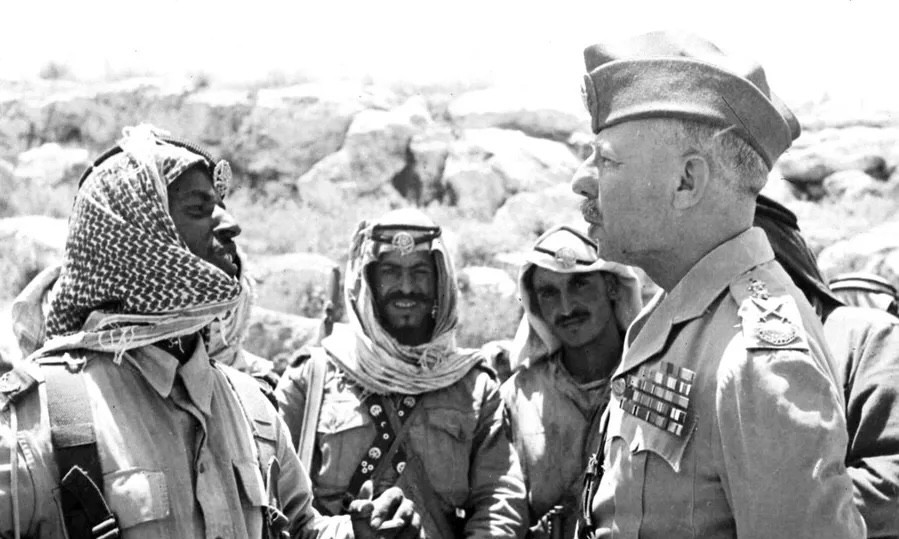
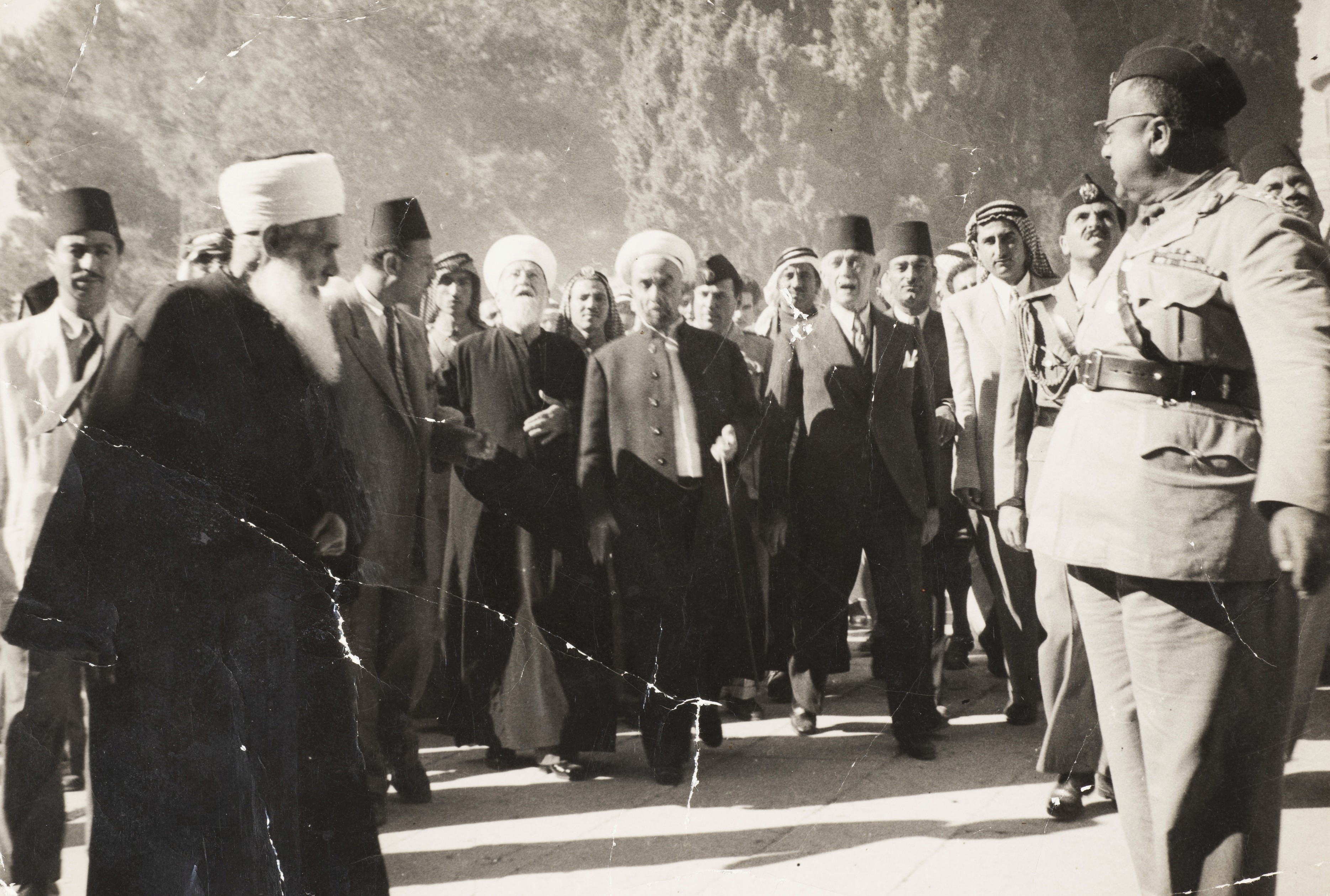
The alleged prominent role of Brig. P. A. Clayton in the organization and subsequent planning of the Arab League was cited and British influence over King Abdullah of Trans-Jordan and his Arab Legion was described as almost absolute. King Abdullah has announced that he will personally lead his men into Palestine.
“Could King Abdullah carry out his threat without British knowledge and consent?” the memorandum asked. “The facts show that Trans-Jordan is a military appendage of the British and could not act without their knowledge and consent.”
An annual British expenditure of $7,500,000 for the legion was cited. An alleged confidential dispatch, calling for British infantrymen to volunteer for the legion’s training mission, was reproduced.
One alleged intelligence report said three or four German officers were with Arab forces near Jaffa and Lydda, though they refused to meet any British volunteers. Another, cited as evidence of pro-Arab sentiment among the British, described the Arab “invaders” in northern Palestine as well disciplined and “a considerable stabilizing influence.”
Messages were quoted concerning the granting of visas to a Briton and an Egyptian to enter Palestine from Egypt to purchase “Army surplus stores.” The implication of the memorandum was that these supplies would go to Arab forces.
Describing the arrival at Cyprus of two shiploads of Jews from Rumania in January, among whom Communist agents had been reported, the memorandum said a member of the Palestine Criminal Investigation Department had questioned five of the young men aboard. When questions concerning Soviet ship and troop movements failed to elicit any information, the memorandum said, the five immigrants were slapped and kicked and finally returned blindfolded from the interrogation center.
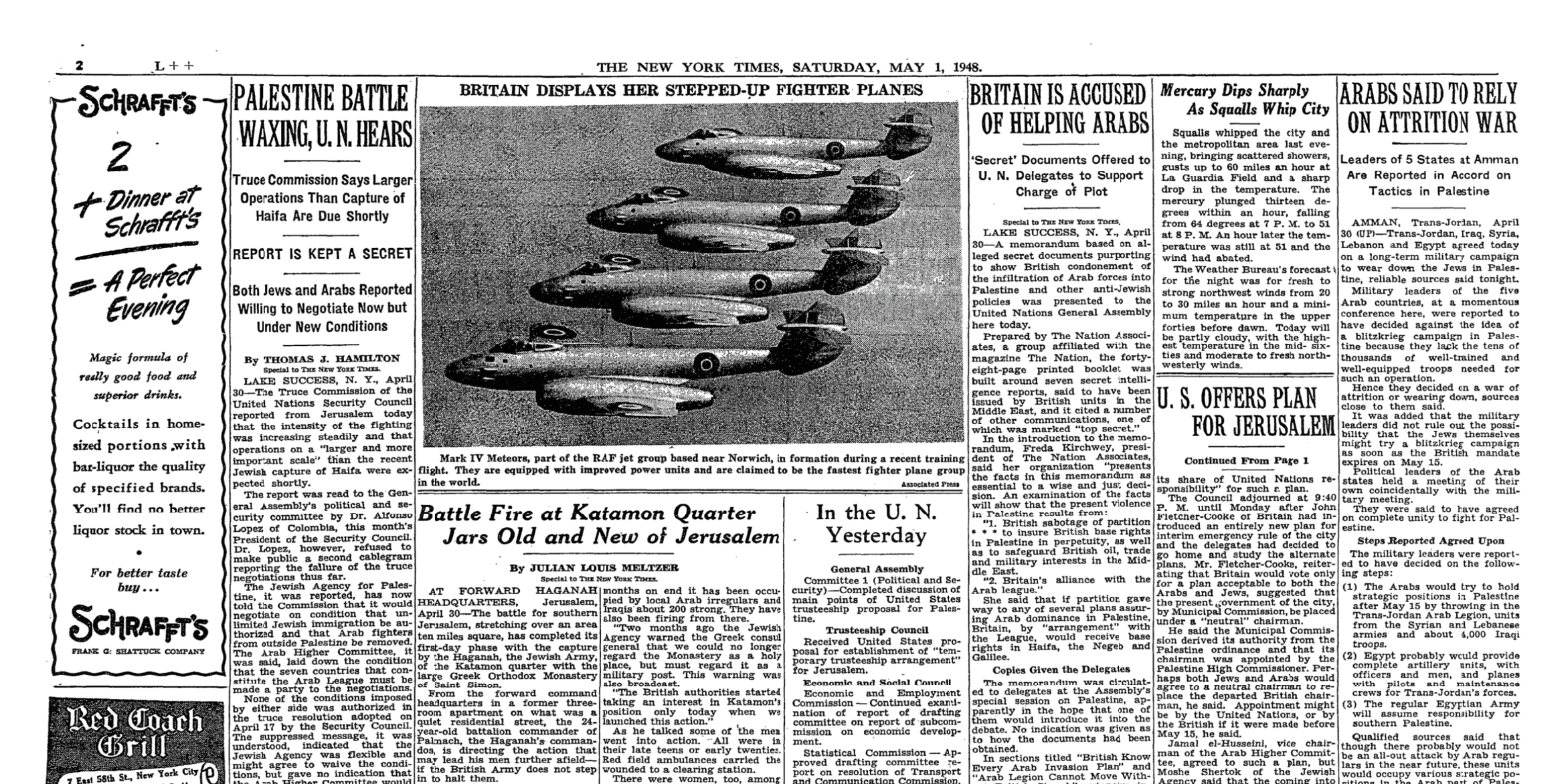
May 1, 1948 | © The New York Times
Archival material reproduced here for educational and research purposes under fair use. Original copyright belongs to the respective publisher.
About

Every headline has a history. We go back to the archives of the same media you read today — to show how their own words have changed. Facts don’t expire. Narratives do.
Featured Posts