RISE IN SLAVERY LINKED TO ARABS
African Traffic Is Reported Spurred by Saudi Dealers — U.N. Action Sought
By KENNETH LOVE
Special to The New York Times
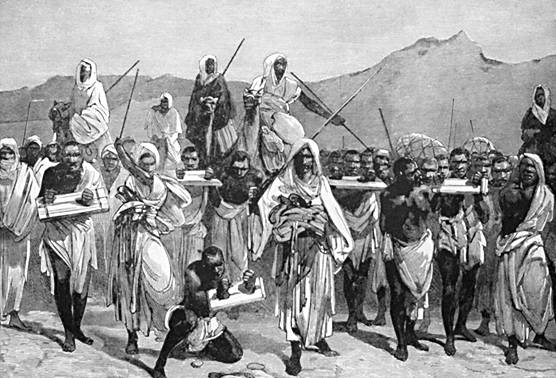
LONDON, Feb. 20 — Saudi Arabian slave dealers, seeking concubines for the “harems” of wealthy customers, are reported to be increasing their African traffic on a transcontinental basis.
Charles W. W. Greenidge, secretary of the Antislavery and Aborigines Protection Society, said here today he was preparing a report on the African slave trade for submission to the United Nations Economic and Social Council in April. He said his society would recommend immediate establishment of machinery to supervise application of United Nations conventions on slavery.
Mr. Greenidge said the increase in traffic was a result of weakening controls by African colonial governments.
An important and little-known aspect of the present slave traffic is the practice of collecting slaves by Arab agents posing as conductors of Moslem pilgrimages to Mecca, Mr. Greenidge said. This traffic is described in an official report by the French Embassy in Jidda, Saudi Arabia, dated Nov. 7, 1953, which Mr. Greenidge will include in his report.
‘Pilgrimages’ Organized
The French document says that Saudi Arabian merchants in Jidda and Mecca send agents to villages in the Sudan and the Niger and Volta River regions on the Atlantic seaboard with orders to obtain slaves.
Pretending to be missionaries, the agents organize “pilgrimages,” the report said, and conduct them overland to Port Sudan and Saukin on the Sudanese Red Sea coast. The “pilgrims” are then taken across the Red Sea in small Arab sailing vessels and landed at Lith, a small port on the Saudi Arabian coast 120 miles south of Jidda.
At Lith, according to the report, they are arrested as illegal pilgrims and taken to the prison in Jidda. They are reportedly delivered to the Saudi consignee by the Jidda police after a night in prison and are sold immediately.
Girls usually bring the highest prices, ranging from 2,000 to 4,000 riyals ($550 to $1,100), the report continued, while men bring 1,500 riyals ($400) and old women bring only 400 riyals ($105).
The report said the slaves could expect a “much better material life than in their former African villages.” Many of them “submitted quietly and soul to the wishes of their masters.”
Investigation Difficult
The French Embassy’s report said that investigation of the slave traffic was difficult because it was clandestine. The report estimated that several hundred slaves reached Saudi Arabian markets annually through the “pilgrimage” operation. It named ten persons, including the chief of the Jidda municipality, as engaged in the traffic.
Emanuel La Gravière, who conducted an investigation last year for the Assembly of the French Union, an adjunct of the French Parliament, estimated pilgrimage traffic at more than 600 slaves a year. His survey, which incorporates the French Embassy’s report, was published last fall and presented to the Assembly last week. It asserted that slave hunting was conducted in the Cameroons, French West Africa and French Equatorial Africa.
In addition to pilgrimages and outright buying, Mr. Greenidge said, real pilgrims often took servants with them to Mecca and sold them for various reasons.
Mr. Greenidge said the late King Ibn Saud of Saudi Arabia issued decrees in 1936 limiting and regulating slavery and providing for registration of slaves. Both Saudi Arabia and Yemen, he said, have not answered repeated United Nations and other inquiries concerning slaves although both are U.N. member nations.
February 21, 1956 | © The New York Times
Archival material reproduced here for educational and research purposes under fair use. Original copyright belongs to the respective publisher.
About

Every headline has a history. We go back to the archives of the same media you read today — to show how their own words have changed. Facts don’t expire. Narratives do.
Featured Posts